
Starting guitar often feels exciting in the beginning. You imagine playing your favorite songs and improving quickly. But within a few days, many beginners feel confused and stuck. Simple things like pressing strings or switching chords don’t work as expected.
This leads to a common question: why learning guitar feels so hard in the beginning? The truth is, it’s not just about talent. It’s about how the brain and hands adapt to something completely new. Once you understand the reasons, the struggle starts to make sense.
Why Learning Guitar Feels So Hard in the Beginning

Table of Contents
1. Your Fingers Are Not Ready Yet

In the beginning, your fingers are simply not built for guitar. The strings feel sharp, and pressing them down requires more force than expected. Even holding a chord for a few seconds can feel uncomfortable.
This is not failure. It’s just your skin and muscles adapting. Over time, your fingers develop strength and small calluses that make playing easier. But until that happens, every practice session feels harder than it should.
2. Your Hands Don’t Know How to Work Together
Guitar is not just about pressing strings. It’s about timing, rhythm, and coordination between both hands. One hand forms chords while the other controls the strumming pattern.
At first, your brain struggles to manage both at once. You may get the chord right but mess up the rhythm, or strum correctly but lose finger placement. This disconnect makes everything feel slow and frustrating in the early stage.
3. Chords Feel Unnatural and Forced
When you see chords in tutorials, they look simple. But when you try them, your fingers don’t stretch properly or land in the right position. Some strings don’t ring, while others buzz.
This happens because your fingers are not used to these shapes yet. It’s like teaching your hand a completely new language. With repetition, these shapes become natural, but in the beginning, they feel awkward and uncomfortable.
4. Switching Between Chords Breaks Everything
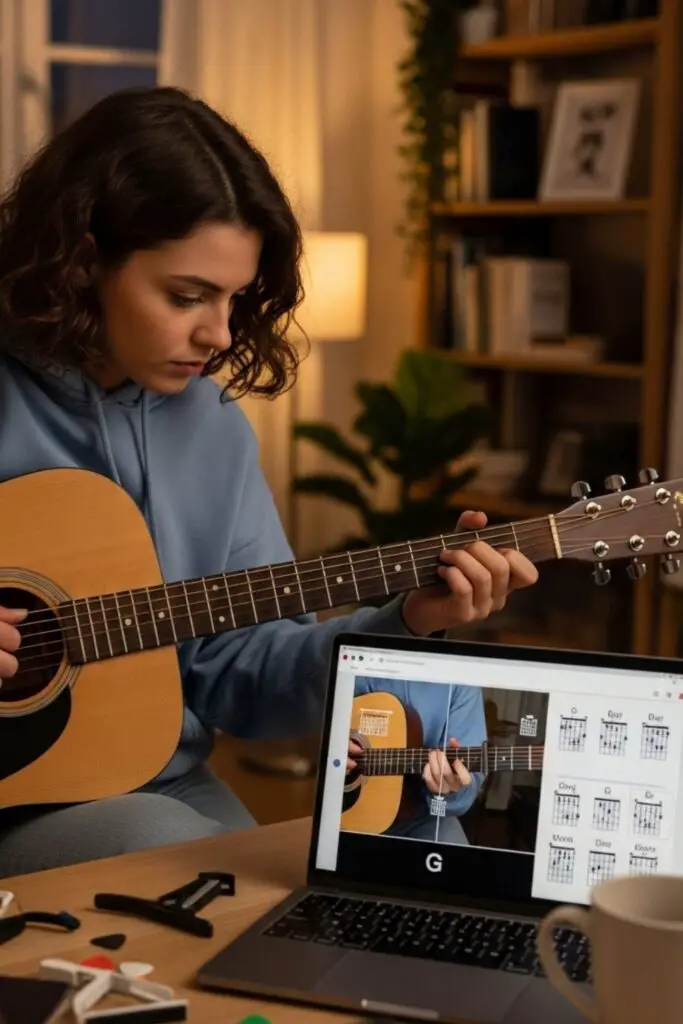
Even if you manage to play one chord correctly, switching to another feels like starting from zero. Your fingers move slowly, and by the time you change, the rhythm is already lost.
This is one of the most frustrating parts for beginners. Many people start doubting themselves at this stage. If this feels familiar, you should read Why Most People Quit Learning Guitar in the First 30 Days, because this is exactly where most people give up.
5. Progress Feels Invisible at First
One of the hardest parts of learning guitar is not seeing clear progress. You practice daily, but it feels like nothing is improving. Songs still sound messy, and mistakes keep repeating.
The truth is, progress in the beginning is very small and slow. Your fingers are getting stronger, your brain is learning patterns, but it’s not obvious yet. Because you can’t “see” improvement, it feels like you’re stuck.
6. Your Brain Is Overloaded

When you play guitar, your brain is doing multiple things at once. It is remembering chord shapes, controlling finger pressure, keeping rhythm, and listening to sound quality.
For a beginner, this is too much at once. That’s why you feel mentally tired after even a short practice session. Over time, these actions become automatic, but in the beginning, your brain is working overtime.
7. You Compare Yourself Too Early
It’s easy to watch someone online playing smoothly and think you should be there already. But what you don’t see is the time and effort behind that level.
Comparing your day-one progress with someone’s year-one skill kills motivation. It creates unnecessary pressure. Learning guitar is not fast, and it’s definitely not the same for everyone.
8. You Don’t Have a Clear Path
Many beginners jump between random tutorials. One day it’s chords, the next day a song, then something completely different. This creates confusion instead of progress.
A structured approach makes a big difference. Interestingly, many adults today are learning guitar more effectively because they follow a clearer path. You can explore this in 10 Possible Reasons Why More Adults Are Picking Up Guitar Now.
9. Consistency Becomes the Real Challenge
In the beginning, motivation is strong. But after a few days of struggle, it starts to drop. Missing a few practice sessions slows progress even more.
This creates a cycle where you feel stuck, so you practice less, and then feel even more stuck. The people who improve are not always the most talented. They are the ones who stay consistent.
10. You Focus Too Much on What’s Wrong

Beginners often notice only mistakes. Buzzing strings, missed chords, wrong timing. This creates frustration and makes practice feel negative.
But small improvements are happening at the same time. Your fingers are getting faster, your sound is slightly cleaner, and your timing is improving. When you shift your focus to progress rather than mistakes, learning feels easier.
Why does learning guitar feel so hard in the beginning?
Because your fingers, brain, and coordination are all adjusting simultaneously, the early phase is slow and uncomfortable.
Why am I struggling to learn guitar?
Most beginners struggle with finger strength, chord switching, and rhythm. These are normal and improve with consistent practice.
What is the hardest part of learning guitar?
Chord transitions and hand coordination are usually the hardest parts in the beginning.
Does guitar get easier over time?
Yes. As muscle memory builds and fingers get stronger, playing becomes smoother and more natural.
How long does it take to get comfortable with a guitar?
Most beginners start feeling comfortable after a few weeks of regular practice.
Conclusion
Learning guitar feels hard in the beginning because everything is unfamiliar. Your fingers hurt, your brain feels overloaded, and progress seems invisible. But none of this means you can’t learn.
In fact, this phase is something every guitarist goes through. The difference is not talent. It’s patience. Once you push through the early struggle, things start to feel smoother. And that’s when guitar becomes enjoyable, not frustrating.
🎸 Enjoying GuitarTwitt?
Join 2,000+ guitarists getting free chord sheets and guitar tips every week.
+ Get our Top 20 Easy English Songs Chord Book free today.
🔒 No spam. Unsubscribe anytime.