

You picked up a guitar. You’re excited. And now you’re staring at a fretboard with zero idea where your fingers go.
Good news — you only need 5 chords to play hundreds of songs. Not 50. Not 20. Just five.
These are the foundational open chords that every guitarist on the planet learned first. Master them, and you’ll be strumming along to real music within a week.
Let’s get into it.
What Are Open Chords?
Open chords (also called “first position” chords) use a mix of fretted notes and open strings — strings you strum without pressing down. They sit in the first three frets and require minimal hand strength, making them perfect for beginners.
The five chords we’re learning today are:
- Em (E minor)
- C (C major)
- G (G major)
- D (D major)
- Am (A minor)
Chord 1: Em (E Minor) — The Easiest Chord in Guitar
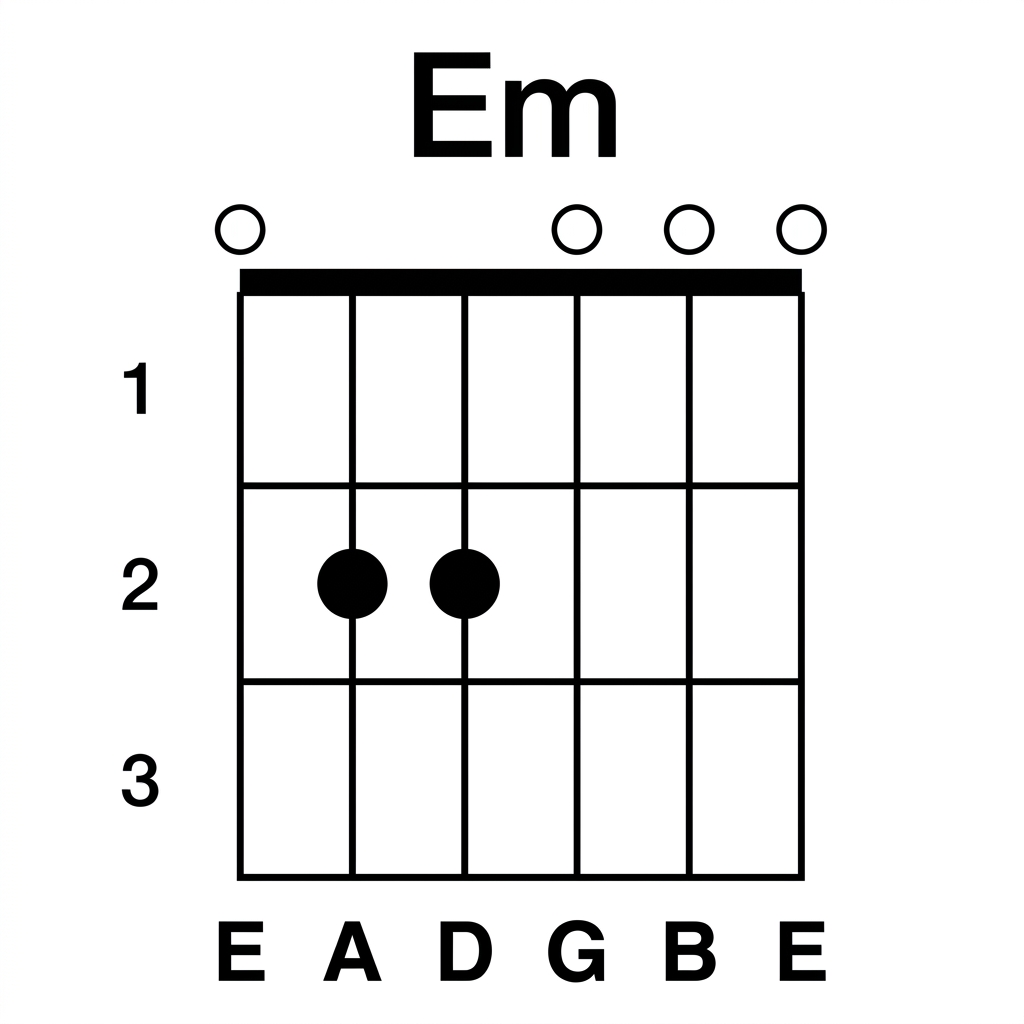
Why start here: Em uses only two fingers. If you can press two strings, you can play Em. It’s the confidence-builder chord.
How to Play Em
| String | Finger | Fret |
|---|---|---|
| 6th (Low E) | Open | — |
| 5th (A) | Middle finger | 2nd fret |
| 4th (D) | Ring finger | 2nd fret |
| 3rd (G) | Open | — |
| 2nd (B) | Open | — |
| 1st (High E) | Open | — |
Pro Tips
- Press with your fingertips, not the flat pads of your fingers.
- Strum all 6 strings — everything rings in Em.
- This is also the shape you’ll modify to make E major later.
Chord 2: C Major — The King of Chords
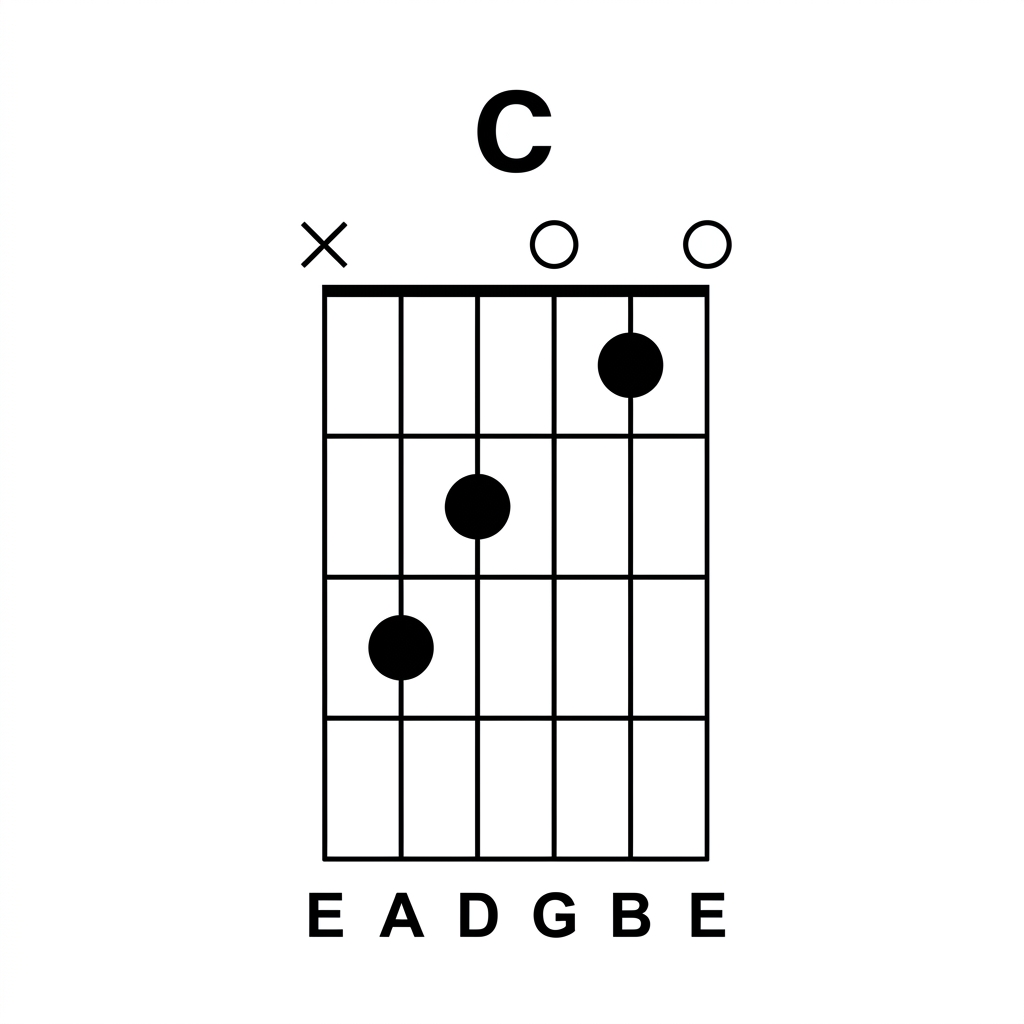
Why it matters: C major is the backbone of thousands of songs. It’s the first chord on the piano and the most natural-sounding chord in Western music.
How to Play C Major
| String | Finger | Fret |
|---|---|---|
| 6th (Low E) | Don’t play | — |
| 5th (A) | Ring finger | 3rd fret |
| 4th (D) | Middle finger | 2nd fret |
| 3rd (G) | Open | — |
| 2nd (B) | Index finger | 1st fret |
| 1st (High E) | Open | — |
Pro Tips
- Avoid the 6th string. Start your strum from the 5th string (A).
- Arch your fingers so the open G and E strings ring clearly.
- C major is the hardest of these five — if you nail it, the rest are a breeze.
Chord 3: G Major — The Full Sound
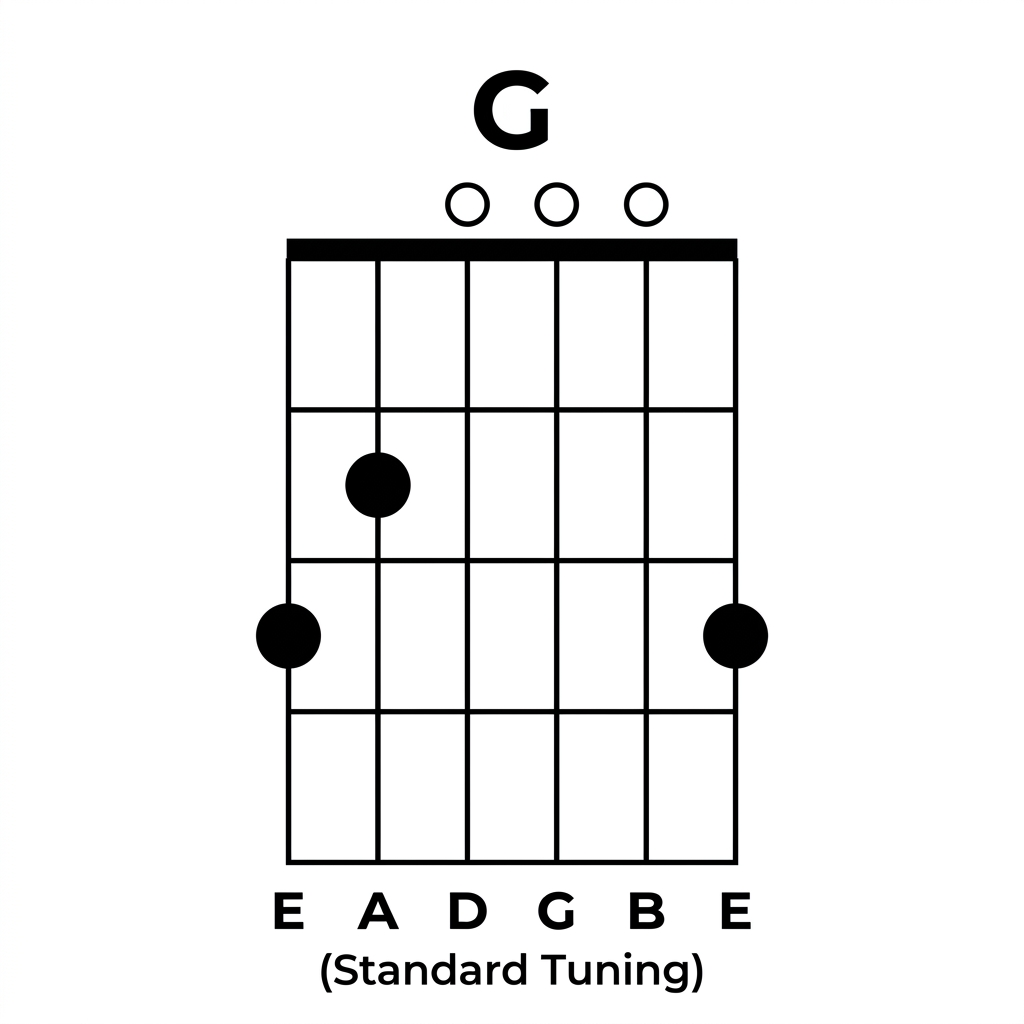
Why it matters: G major uses all 6 strings and gives you that warm, full-bodied guitar sound. It pairs beautifully with C and D, which is why these three appear in nearly every campfire song ever written.
How to Play G Major
| String | Finger | Fret |
|---|---|---|
| 6th (Low E) | Ring finger | 3rd fret |
| 5th (A) | Middle finger | 2nd fret |
| 4th (D) | Open | — |
| 3rd (G) | Open | — |
| 2nd (B) | Open | — |
| 1st (High E) | Pinky | 3rd fret |
Pro Tips
- Strum all 6 strings — they all belong in G major.
- Some players skip the pinky on high E and it still sounds fine, but adding it makes the chord ring more fully.
- The transition from G → C → D is the most important one you’ll ever learn.
Chord 4: D Major — The Bright One
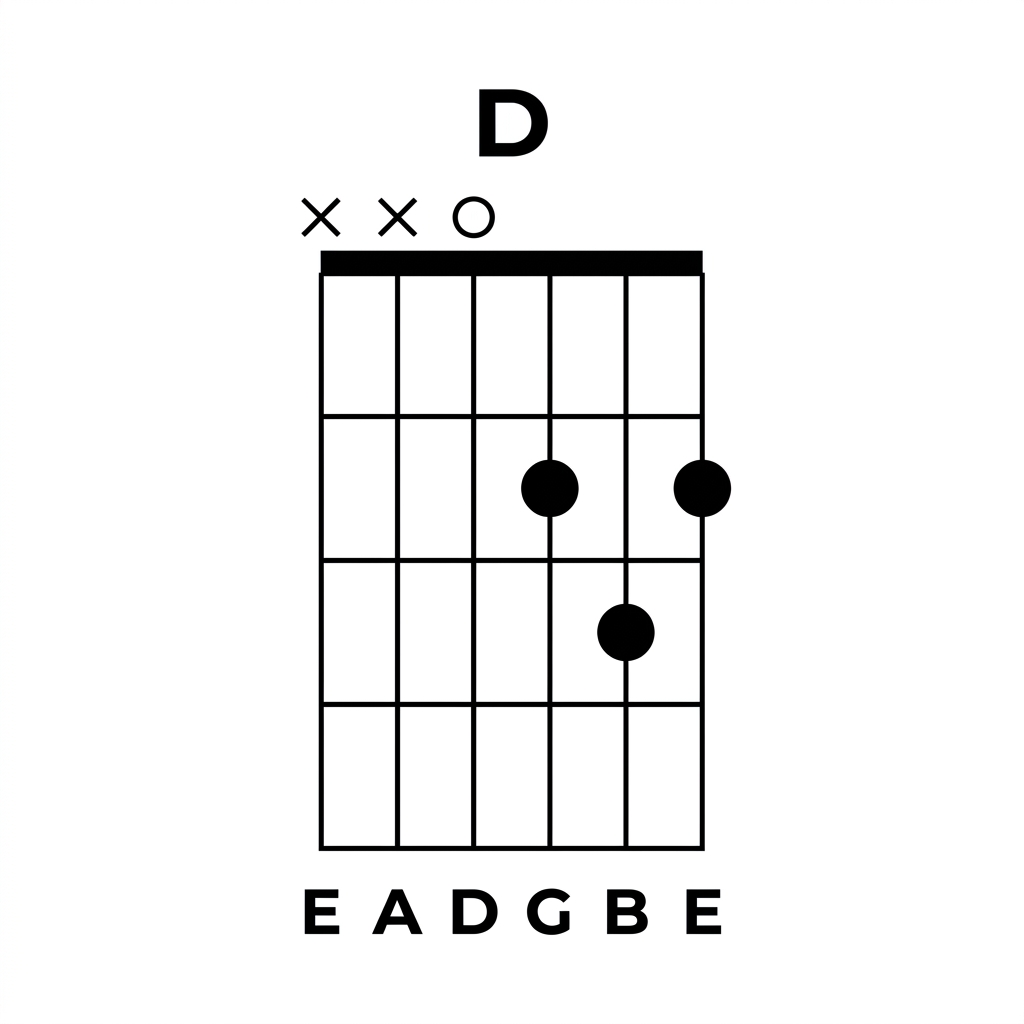
Why it matters: D major has a focused, bright sound that cuts through perfectly in strumming patterns. It’s essential in pop, country, and rock music.
How to Play D Major
| String | Finger | Fret |
|---|---|---|
| 6th (Low E) | Don’t play | — |
| 5th (A) | Don’t play | — |
| 4th (D) | Open | — |
| 3rd (G) | Index finger | 2nd fret |
| 2nd (B) | Ring finger | 3rd fret |
| 1st (High E) | Middle finger | 2nd fret |
Pro Tips
- Only strum the bottom 4 strings (4th through 1st).
- The triangle shape of D major should feel compact — all three fingers fit in a tight cluster.
- Make sure each finger is arched so the open D string rings clearly.
Chord 5: Am (A Minor) — The Emotional One
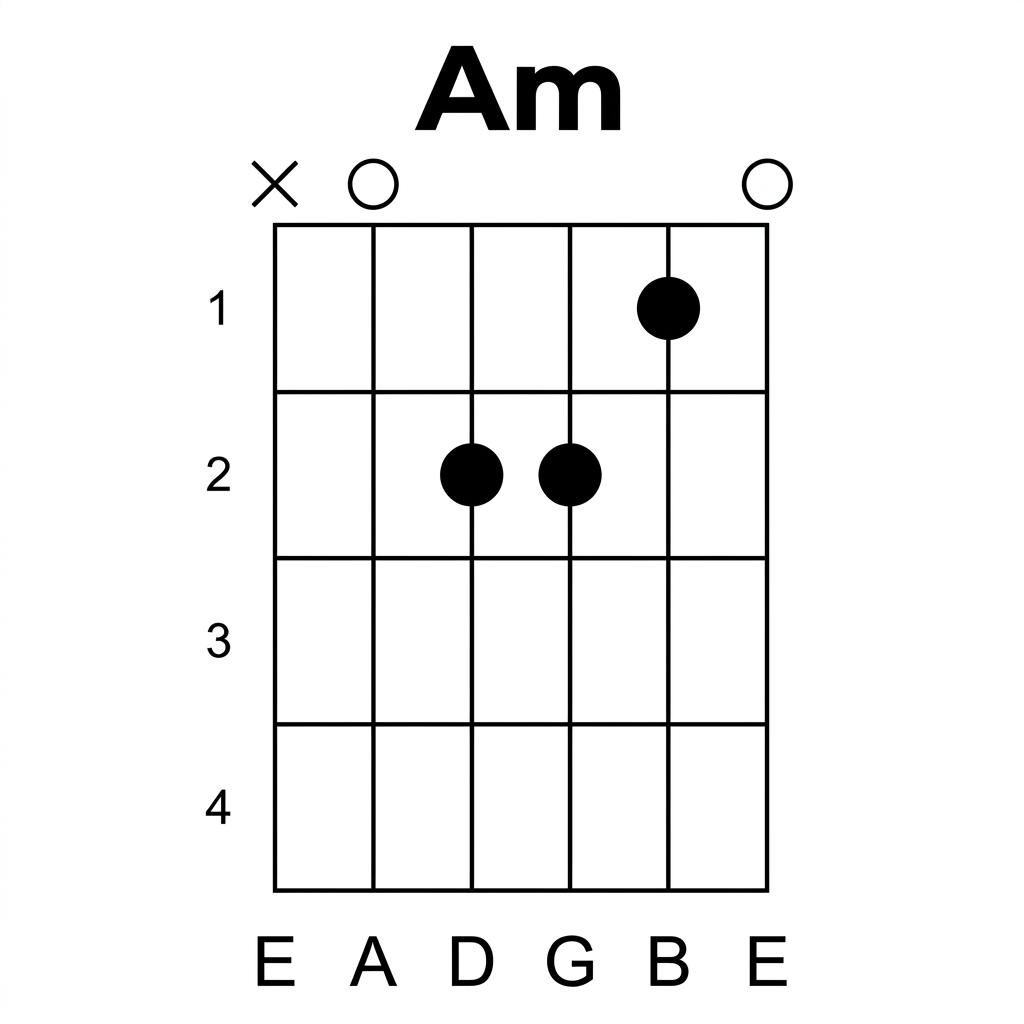
Why it matters: Am adds depth and emotion to your playing. While C, G, and D sound bright and happy, Am brings a melancholic, soulful quality. Together, they complete the circle.
How to Play Am
| String | Finger | Fret |
|---|---|---|
| 6th (Low E) | Don’t play | — |
| 5th (A) | Open | — |
| 4th (D) | Middle finger | 2nd fret |
| 3rd (G) | Ring finger | 2nd fret |
| 2nd (B) | Index finger | 1st fret |
| 1st (High E) | Open | — |
Pro Tips
- Am is almost identical to C major — your index stays put and the other fingers shift. This makes the C ↔ Am transition incredibly smooth.
- Start strumming from the 5th string (A).
The 10-Song Challenge — Play These With Your 5 Chords
Once you can switch between Em, C, G, D, and Am smoothly, try these songs:
| Song | Artist | Chords Used |
|---|---|---|
| Let It Be | The Beatles | C, G, Am, D |
| Wonderwall | Oasis | Em, G, D, Am |
| Love Yourself | Justin Bieber | C, G, Am, D |
| Ho Hey | The Lumineers | C, G, Am |
| Riptide | Vance Joy | Am, G, C |
| Wish You Were Here | Pink Floyd | G, C, D, Am |
| Knockin’ on Heaven’s Door | Bob Dylan | G, D, Am, C |
| Horse With No Name | America | Em, D |
| Perfect | Ed Sheeran | G, Em, C, D |
| Hasi Ban Gaye | Ami Mishra | Am, C, G, Em |
Common Beginner Mistakes (And How to Fix Them)
1. Buzzing Strings
Cause: Fingers not pressing hard enough or placed too far from the fret.
Fix: Position fingertips close to — but not on top of — the metal fret wire.
2. Muted Strings
Cause: Fingers accidentally touching adjacent strings.
Fix: Arch your fingers more. Curl them so the tips press down vertically.
3. Sore Fingertips
Cause: You’re a beginner. That’s normal.
Fix: Play for 10–15 minutes daily instead of marathon sessions. Calluses form within 2–3 weeks.
4. Slow Chord Changes
Cause: Lifting all fingers off at once and repositioning.
Fix: Find “anchor fingers” — fingers that stay in the same position between chords. For example, when going from Am to C, your index finger stays on the 1st fret of the B string.
Practice Routine: Zero to Playing in 7 Days
| Day | Focus | Duration |
|---|---|---|
| Day 1 | Learn Em and Am shapes. Strum each 8 times. | 10 min |
| Day 2 | Learn C major. Practice Am ↔ C switch. | 15 min |
| Day 3 | Learn G major. Practice C ↔ G switch. | 15 min |
| Day 4 | Learn D major. Practice G ↔ D switch. | 15 min |
| Day 5 | Chain: G → C → D → C → G. Repeat 20 times. | 20 min |
| Day 6 | Add Am and Em. Play full progression: G–Em–C–D. | 20 min |
| Day 7 | Pick a song from the list above and play along. | 30 min |
What’s Next After These 5 Chords?
Once you’ve mastered these five open chords, your next steps are:
- Learn basic strumming patterns to make your chords sound musical.
- Learn how to tune your guitar properly (essential if you want to sound right).
- Explore the capo — a small device that lets you play even more songs with these same 5 shapes.
You don’t need 100 chords to have fun. You need these five, some practice, and a song you love.
Start strumming. The rest follows.
Frequently Asked Questions
What are the easiest guitar chords for beginners?
The 5 easiest guitar chords for beginners are Em (E minor), C major, G major, D major, and Am (A minor). These are all open chords that sit in the first 3 frets and require minimal finger strength. Em is the easiest — it only needs 2 fingers. These 5 chords let you play hundreds of Bollywood and English songs.
How many chords do I need to know to play songs?
You only need 4-5 chords to play most popular songs. The combination of G, C, D, Am, and Em appears in thousands of songs across every genre — from Bollywood hits like “Hasi Ban Gaye” and “Tum Hi Ho” to English songs like “Let It Be” and “Perfect” by Ed Sheeran.
How long does it take to learn guitar chords?
Most beginners can learn all 5 basic open chords within 1 week of daily practice (15-20 minutes per day). Switching between chords smoothly takes about 2-4 weeks. Building calluses on your fingertips takes approximately 2-3 weeks of consistent playing.
Why do my guitar chords sound bad or buzzy?
The most common reasons are: (1) fingers placed too far from the fret wire — move them closer, (2) not pressing hard enough with fingertips, (3) fingers accidentally touching adjacent strings — arch your fingers more, and (4) the guitar is out of tune. Make sure to tune your guitar before practicing.
Which Bollywood songs can I play with just 4 chords?
Many popular Bollywood songs use just 3-4 chords: “Hasi Ban Gaye” (Am, C, G, Em), “Tum Hi Ho” (Am, F, C, G with capo), “Kal Ho Naa Ho” (G, C, Am, D), and “Channa Mereya” (Am, C, G, F). Start with songs that use only the chords you’ve learned.
🎸 Enjoying GuitarTwitt?
Join 2,000+ guitarists getting free chord sheets and guitar tips every week.
+ Get our Top 20 Easy English Songs Chord Book free today.
🔒 No spam. Unsubscribe anytime.